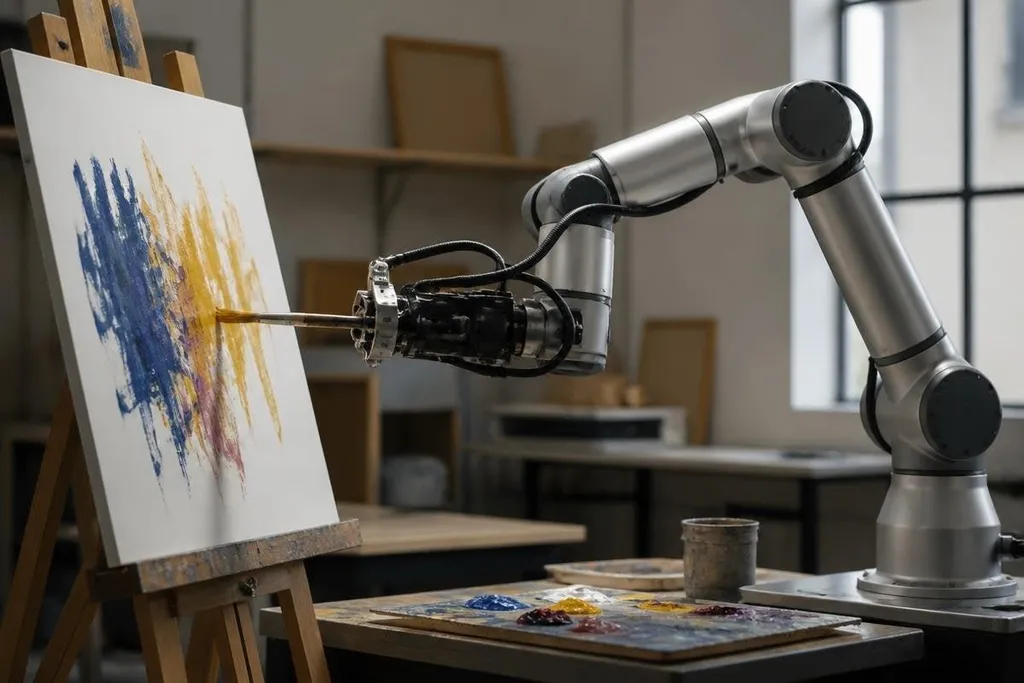
A robot can draw a picture, write a tune, or choose a new path through a room. That output may look creative, but the machine’s process matters more than the result.
Quick read
- New output does not prove intent
- Generative models work from learned patterns
- Robot creativity needs tests beyond surprise
What the machine actually does
A generative model produces text, images, sound, or other outputs from patterns found in its training data. It can combine those patterns in ways its maker did not specify line by line.
That gives the machine room to produce something new to the person watching it. New to the viewer, though, does not always mean new to the system. The model may be selecting from many learned options without knowing what the output means.
Robots can also make choices during physical tasks. A mobile robot may select a route around an obstacle, while a robot arm may change its grip after an object moves. Those actions show adaptation to the situation. They don't prove that the robot had an idea or wanted a result.
The difference matters in a factory. A machine that finds a workable route can save time and avoid a collision.
The operator needs to know how the choice was made, how often it works, and what happens when the scene changes. Calling the action creative adds little unless it helps answer those questions.
A useful test for creative behavior
A serious test needs more than an unusual result. Start with purpose. Did a person give the robot a clear goal, or did the system choose the goal itself?
Next, check novelty. Has the robot made something new within the task, or has it copied a known pattern with small changes? A new gripper shape, a different melody, and an unexpected route need separate checks because novelty means something different in each case.
Then look at judgment. Can the robot reject a poor result and explain why another one works better? Can it change its method after a failed attempt? A system that scores many options may produce a better design, but scoring is not the same as understanding.
Last, check transfer. If the robot succeeds only in the setting used for training, its behavior may be narrow. A system that applies a learned method to a new material, layout, or task gives stronger evidence of flexible problem-solving.
These tests describe behavior. They don't settle the larger question of machine experience. A robot may act in a creative way without having feelings, self-awareness, or a private view of the work.
Why the label matters for robotics
The word creative changes how people judge a machine. A designer may trust a robot-generated part because the result looks original. An operator may give more freedom to a system that appears to understand a repair task. That trust needs a record of what the machine did, not a label attached after the fact.
A robot that draws a part or picks a repair path raises a practical test: how much came from the system, and how much came from its human instructions? Robot24.com robotics coverage can place that result beside the prompt, task limits, and human role. The record shows whether the machine made a choice or followed a rule written by a person.
A useful report should show the prompt, the limits, the failed attempts, and the final result. A video of one successful action can show what happened in that clip. It cannot show how the system behaves across a full workday or after a small change in the task.
The strongest case for robot creativity may come from systems that set goals, test ideas, learn from failure, and explain their choices. Each part needs its own evidence. A polished image or smooth motion is only the visible end of the process.
A practical check before you make the claim
Use this checklist when a vendor, researcher, or demo calls a robot creative:
- Name the task. State what the robot made or changed, such as a route, part, image, or movement.
- Record the starting rules. Note the data, instructions, sensors, and limits given to the system.
- Check repeat runs. Run the task again and record how often the robot reaches a useful result.
- Change the setting. Try a new object, room layout, material, or goal to test flexible behavior.
- Inspect failure. Record what the robot does after a poor result, blocked path, or wrong decision.
- Separate result from reason. Ask if the system can state why it chose one option over another.
That process gives you a clearer claim. You may find a robot that creates useful designs without finding proof of human-like thought.
I don't think a novel output proves creativity. The harder test is still open: can a robot form a goal, judge its own work, and carry that judgment into a new task?